
Part 1: Why the Resurrection Deserves Serious Examination
Part 2: Why the Alternative Theories Fail
Part 3: The Earliest Christian Source
Part 4: The Gospel Accounts of the Resurrection
Perhaps the most difficult fact for a skeptic to explain is the transformation of Jesus’ disciples.
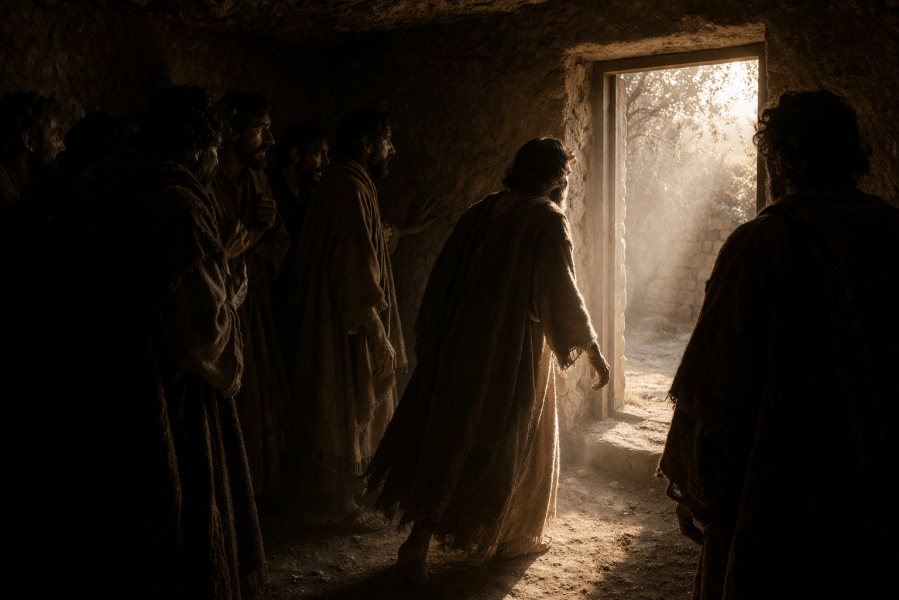
Before the crucifixion, Jesus’ followers were not a bunch of brave visionaries poised to launch a new religious movement. They had their own questions about Jesus’ teachings, and their own hesitations with his methods. At the time of the crucifixion, they were frightened. After Jesus died, they went into hiding. Their Messiah had been publicly executed and defeated by the Romans in the most public and humiliating way imaginable. With his death, all their hopes appeared to have died as well.
And yet, on that Sunday, everything changed.
The same group that had fled for fear began preaching openly and boldly in public, in the very city where Jesus had just recently been executed and buried. They were bold, confident, joyful, and willing to suffer. Many were even willing to die for their testimony, and some of them did. This kind of sudden transformation is not what you see in normal emotional recovery from grief. Something convinced them that Jesus had truly risen from the dead.
Even more striking is how suddenly and radically their theology changed.
Prior to AD 30, Jews held a variety of beliefs about resurrection. Some groups, such as the Sadducees, rejected it entirely. Most, however, believed that there would one day be a general resurrection of the dead at the end of history, in a single event when the righteous would be vindicated.
But one belief that was completely absent from all Jewish literature was the idea that the resurrection would happen in two stages, beginning with one individual in the middle of history, all by himself.
Even more importantly, no one believed that the Jewish Messiah would rise from the dead after being crucified. A “crucified Messiah” was a contradiction in terms. If your chosen Messiah was killed by the Romans, you either abandoned the movement or found a replacement Messiah. What you would not do is invent a story about him rising from the dead. No one would believe it.
Yet suddenly, these never-imagined-before ideas appeared and began to spread like wildfire. Numerous people began proclaiming that the Jewish Messiah had been publicly executed by the Romans, but then God raised him from the dead. The resurrection, which was previously only a peripheral and occasionally debated concept among the Jews, was suddenly thrust to the forefront. Something drastic happened.
This sudden and widespread shift, in both demeanor and theology, demands some sort of explanation. Somehow the historian must explain why the Christians suddenly modified and developed the long-held Jewish assumptions about the resurrection. Where did these ideas come from? And why did they show up so suddenly, especially in the face of persecution and death?
So what was it? What was that “something”?
Whatever the explanation, it must account for the empty tomb, the resurrection appearances, the multiple independent witnesses, and the sudden rise of Christianity itself in the particular form it took. Any theory that fails to adequately explain all of these falls short.
If we ask the earliest Christians what changed, their answer was clear, consistent, and it explains all of these developments with ease. They believed this because Jesus rose from the dead. The resurrection easily explains the empty tomb, the resurrection appearances, and the sudden development in theology. No alternative naturalistic theory does.
 The Christian Exile