“God’s Kingdom and the World’s Kingdoms are Separate” by David Lipscomb

The Gospel Advocate, Mar. 13, 1866, pp. 161-166.

Christ recognized the claims of the Tempter to the kingdoms of this world. Acknowledged by his action at the time, by his response to the wicked one, through his inspired apostles, Matthew, Luke and Paul, that the offer of the kingdoms of this world by the wicked one, was a temptation to the Son of God. This could only have been true on the supposition that they were actually the possession of the devil. The world had been delivered him by men to whose control God had committed it. Christ, we have found, came into the world to rescue it from the dominion or possession of the wicked one. He proposed to do this, not by entering into and controlling the kingdoms of this world, that had been established under the rule and in the interest of the wicked one, but by destroying and consuming these and establishing a kingdom, “not made with hands” (Dan. 2:34-35; 44-45) – one whose “founder and builder is God” (Heb. 11:10).

We find the Savior definitely marking his relationship to these kingdoms, when he asks Peter,

“Of whom do the kings of earth take custom or tribute? Of their own children or of strangers?” Peter saith unto him, “Of strangers.” Jesus saith unto him, “Then are the children free. Notwithstanding, lest we should offend them, go thou to the sea, and cast an hook, and take up the fish that first cometh up, and when thou hast opened his mouth, thou shalt find a piece of money: that take and give unto them for me and for thee.”

Matthew 17:25-27

He thus, by his own act, confirmed by a miracle, places himself and the Apostle Peter among the strangers to the kingdoms of this world. They are the children of no earthly government, although born and living under them.

The enemies of the Savior saw that his claims to be king were adverse to the claims of any earthly potentate or power, so they made this the chief ground of opposition to him.

The Pharisees ask him, “Is it lawful to give tribute unto Caesar, or not? But Jesus perceived their wickedness, and said, Why tempt ye me, ye hypocrites? Shew me the tribute-money. And they brought unto him a penny. And he saith unto them, whose is this image and superscription? They say unto him, Caesar’s. Then saith he unto them, render, therefore, unto Caesar, the things that are Caesar’s; and unto God, the things that are God’s.”

Matthew 22:17-21

Or as Tertullian, over fifteen hundred years ago, commented on this as follows:

The image of Caesar, which is on the coin, we give to Caesar. The image of God which is in man, is to be given to God. Therefore, thou must give the money, indeed, to Caesar, but thyself to God, for what will remain to God, if both man and money he given to Caesar?

On Idolatry, chapter 15

The enemies of the Savior knew that his kingdom was in opposition to all earthly kingdoms, so they expected him to forbid the paying of tribute to Caesar, and to develop an open and violent hostility to Caesar’s government. They only mistook the nature of his weapons and kingdom, as well as the manner of establishing that kingdom. In accordance with this idea, the charge which they made against like at his crucifixion was that he claimed to be a king, therefore could not be Caesar’s friend (Mark 15:1-2; Luke 23:2-3; John 18:34-35). He admitted the charge, but only answered, “My kingdom is not of this world” (John 18:36). It enters not the contest and strife for dominion after the manner of the earthly kingdoms. It uses no earthly weapons or violent means in its establishment. When Pilate is disposed to release Jesus, the multitudes cry at him. “Let this man go, thou art not Caesar’s friend” (John 19:12).

This same feeling of antagonism manifested itself in the persecution, punishment and martyrdom of the Apostles and primitive Christians by the rulers and powers of the earthly kingdom. This antagonism was foretold by the Prophets.

Why do the heathen rage, and the people imagine a vain thing? The kings of the earth set themselves, and the riders take counsel together, against the Lord, and against his Anointed.

Psalm 2:1-2

Peter and John, after the healing of the impotent man in Solomon’s porch, were arrested and straightway threatened that they should speak no more in the name of Jesus. They quote the foregoing from David, and apply it.

For a truth against thy holy child Jesus, whom thou hast anointed, both Herod and Pontius Pilate, with the Gentiles, and the people of Israel were gathered together, for to do whatsoever thy hand and thy counsel determined before to be done, and now, Lord. behold their threatenings.

Acts 4:26

Jesus Christ recognized, clearly, this antagonism. He recognized ever that the world governments were his enemies. They sought his life at his birth. To destroy him, Herod “destroyed all the children of two years old and under, in Bethlehem, and in all the coasts thereof” (Matt. 2:16). Christ selects and sends out his twelve apostles. He tells them

They shall be delivered up to the councils, and by them be scourged in the synagogues, and ye shall be brought before governors and kings for my sake, for a testimony against them and the Gentiles.

Matthew 10:17-18

The taking on themselves the name of Christ, would bring on them the opposition and persecution of the political governments. But in these trials to which they are subjected, on account of Christ, he tells them, “Fear not them [the civil rulers] who kill the body, but are not able to kill the soul: but rather fear him [God] who is able to destroy both soul and body in hell” (Matt. 10:28). Christ speaking of his death said, “Now is the judgment of this world: now shall the prince of this world be cast out” (John 12:31).

In other words, now is the trial of the strength of the prince of this world and the Prince of Heaven. The power of the prince of this world will be triumphed over, and thus will his claims be regarded and his power overthrown. In the trial of strength, Jesus Christ permits the rulers of this world to exercise their utmost stretch of power by killing the body, he then rises a victor from the grave, there­by showing that when they have exerted their utmost stretch of power, he can overcome and destroy all their work. Paul, speaking of the triumph of Christ over the highest powers of the mightiest of earthly kingdoms, says,

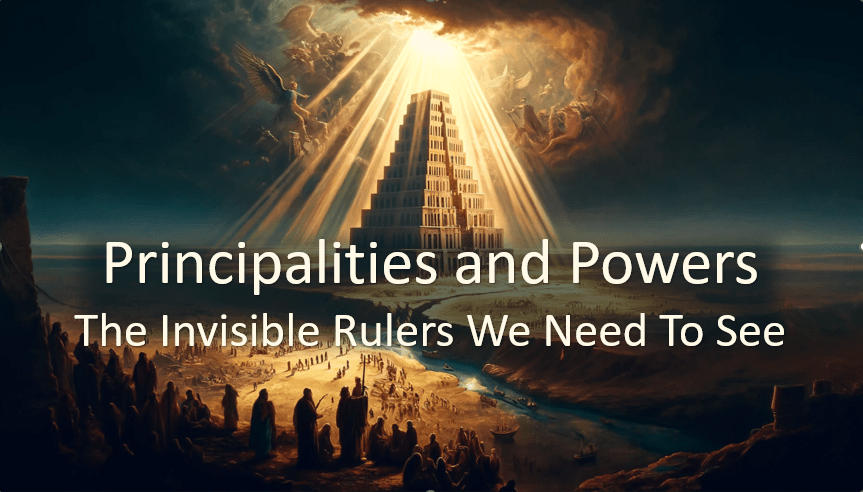
Having spoiled principalities and powers, he made a show of them openly, triumphing over them in it.

Colossian 2:15

He spoiled them by destroying their prestige of superiority, and in his personal triumph over their utmost stretch of power, he gave the assurance that in the long controversy he had entered upon with the nations, his final triumph and their utter destruction were sure. He made a shew of his triumph over them, in shewing himself after his resurrection from the grave. He shews his superior power to them all. You can only carry down to the grave. I am superior to the prison bonds of death. Where then your boast[s]? But this antagonism is presented again,

Hereafter I will not talk much with you for the prince of this world cometh, and hath nothing in me.

John 14:30

Here he announces that the prince of this world—he that governs and rules the world, hath nothing in Jesus—no interest or prestige in his kingdom. Who is the prince of this world? The wicked one—the devil? Then he operates through and uses Pontius Pilate, the civil ruler. The civil ruler, the human government then, is the agency through which the devil works. But says one, the prince of this world was Pontius Pilate, who was coming. Then Pontius Pilate, the representative of the civil human government, “hath nothing in Christ,” no part, nor lot, nor heritage there. Civil government is the same today that it was then. This government, whose ruler or head, whether Pontius Pilate or the wicked one he referred to, is the same to which the Christians of primitive times were admonished to be subject by Christ and his apostles.

The impression made upon the disciples themselves, was that they were not subjects of the earthly kingdoms. Hence they looked for an earthly kingdom, the restoration of earthly power to Israel. “Lord, wilt thou at this time restore again the kingdom of Israel?” (Acts 1:6). The same impression upon their minds is recognized in the fact that the disposition to carry the idea to an unwarranted extreme, called forth the repeated admonition from the apostle,

Be subject to the powers that be…

Romans 13:1

Submit yourselves to every ordinance of man for the Lord’s sake…

1 Peter 2:13

Put them in mind to be subject to principalities and powers, to obey magistrates…

Titus 3:1

Now if the idea had not have crept into their minds that they were somehow not subject of these earthly kingdoms, there would not have been the necessity for this repeated admonition being given them. Notice, too, they were commanded to do these things for the Lord’s sake, not for the sake of the governments. These admonitions certainly connect the Christian with these earthly governments under which he lives, in relationship that we will examine at the proper time. But they all show the Christian was not taught to regard himself as part and parcel of these kingdoms.

In accordance with this, too, the wicked one is ever regarded in Scripture as the prince of this world.

Now is the judgment of this world: shall the prince of this world be cast out.

John 12:31

The prince of this world is judged.

John 16:11

Wherein in time past ye walked according to the course of this world, according to the prince of the power of the air, the spirit that now worketh in the children of disobedience.

Ephesians 2:2

Put on the whole armor of God, that ye may be able to stand against the wiles of the devil. For we wrestle not against flesh and blood, but against principalities, against powers, against the rulers of the darkness of this world, against spiritual wickedness in high places. Wherefore take unto you the whole armor of God. that ye may be able to withstand in the evil day.

Ephesians 6:11-13

These verses demonstrate the way in which the principalities, powers, the rulers of this world are certainly classed among the wiles of the wicked one that are to be withstood through the use of God’s armor. The wicked one is also sometimes called the God of this world, indicating his influence and power in this world. When the kingdoms of this world become the kingdoms of God and his Son, we presume the devil will no longer be called the God of this world.

We have thus found that the separation and antagonism between God’s institutions and man’s, or as they might now be properly termed, the wicked one’s, kept up and impressed through the four thousand years of the existence of the types, have fully maintained, by the teaching of Christ himself in the great antitype, the spiritual and eternal kingdom of God. We wish to call the attention of the readers here to the fact that the existence of Jesus Christ here on earth in his fleshly body, was to some extent a type of the existence of the spiritual body. His temptations, its temptations, his poverty, sorrows, trials, persecutions, betrayal, death, burial, resurrection and glorious, triumphant ascension, all typifying the same experiences that it must undergo. He never came in contact with the prince of this world, or the governments of this world, but to be tempted to corruption or to be persecuted. The Church of Christ, we may safely affirm, has never come in contact with the governments of this world but to be persecuted or corrupted.

The alliances she has made with the princes and governments of this world have ever been more fatal to her strength and purity than the persecutions she has undergone. Christ was above temptation when the wicked one offered an alliance—his followers have not been proof against the same kind of offers made by the emissaries and agents of the wicked one. Constantine weakened the church a thousand-fold more than Nero or Diocletian. The alliances, friendships, and blandishments of the world-powers today are more fatal to the strength and purity of the church than the combined opposition of the world could possibly be. Then her own experiences accord with the teachings of God, warning her against the association of the world or human institutions. They are the institutions of the wicked one. What fellowship hath Christ with Belial? What participation can a child of God have in the kingdoms of this world?

Again, the Scriptures have recognized every relationship of life into which it is possible for a Christian to enter, and given instruction that thoroughly furnishes the child of God with directions how he should act therein. They have given instruction how the parties should mutually conduct themselves toward each other as husband and wife, parent and child, master and servant, elder and younger, stranger and friend, and even as wrong-doer and wrong-sufferer—every relationship into which it is possible for a Christian to enter, has its appropriate instructions for the Christians guidance therein, save one if it be lawful to enter into that one. In one relationship of life, and that the most universally prevalent one with the human family, this instruction is in part wanting. That relationship is, subject and ruler in the earthly kingdom. One party to this relationship, the subject, is directed and guided as to the manner conducting himself in this relationship. But the ruler, the most important one of all the relationships of this world, because on him the peace and quiet of the world depends, in whose hands the happiness of millions rests, is left without one single word of instruction as to how he should direct himself.

Why this omission, why this painful silence of God as to the Christian ruler of the kingdoms of this world? The Christian father, child, the Christian husband, wife, master, servant, the Christian, that falls into wrong, the Christian that suffers wrong doing, the Christian subject of a human government, all have their rules of conduct laid down in the Scriptures of God, but not a solitary word in the volume of inspiration as to how the Christian ruler of the earthly kingdoms shall conduct himself. What means this omission, friends? “All scripture is given by inspiration of God, and is profitable… that the man of God may be perfect., thoroughly furnished into every good work” (2 Tim. 3:16-17), and yet no direction furnished him how he shall act when he comes to assist in directing and conducting the governments of this world.

The Christian father, husband, wife, child, master, servant, subject, can walk by the light of divine truth, under the spiritual guidance of God, but the Christian ruler, governor, magistrate, law-maker, law-executor, must grope his way in the dark, directed only by his own frail and erring reason; no wonder he makes so many false steps. No wonder his wisest plans so often miscarry. But brethren we ask you seriously, what meaneth this omission? Was it inadvertence, omission, oversight in the law-maker? Who dare so affirm? How can we resist the conclusion that God never anticipated his children participating in the governmental affairs of these earthly kingdoms. He recognized these kingdoms as the kingdoms of the wicked one, and made no provision for his children participating therein.

Beyond the Ballot: Should Christians Vote?

As followers of Christ, we must acknowledge that His authority is the foundation of our beliefs and actions. The New Testament reveals the teachings of Christ and His apostles, and it is in these Scriptures that we find God’s final word on all matters of faith and conduct. We are not permitted to impose human traditions or rules where God has chosen to remain silent. Just as Moses warned Israel not to “add to the word that I command you” (Deuteronomy 4:2), and Paul instructed the Corinthians not to exceed the limits of what is written (1 Corinthians 4:6), we too must respect the boundaries of Scripture. Where Scripture is silent, we must refrain from passing judgment on others holding differing convictions (Romans 14:1-5). Ultimately, there is only true lawgiver (James 4:12). When Scripture is silent on a matter, we must be cautious not to legislate in His place.

This principle directly applies to the question of whether Christians should vote or otherwise involve themselves in earthly politics. Although many enthusiastically encourage Christians to be active in the political process, the New Testament remains silent on the specific topics of voting or political involvement.

“But Christians are called to be salt and light in the world.”

While it is true that Christians are to influence the world as salt and light, Jesus never so much as commented on the hot political issues of His day. When asked directly about sensitive political issues, He used the questions as opportunities to direct people to the kingdom of God (Matthew 15:15-22; Luke 12:13-15). On multiple occasions when Jesus had the opportunity to gain political power (power He most certainly would have used for good), He consistently refused that power (John 6:15), and even considered the offer of such power as a temptation from Satan (Luke 4:5-7).

“But Jesus said His disciples would stand before governors and kings.”

Indeed, Jesus predicted that His followers would stand before powerful political rulers (Matthew 10:18), and they did. Paul preached the gospel to governors like Felix, Festus, and Agrippa (Acts 24-26), and the gospel even reached Caesar’s household (Philippians 4:22). Yet, even in these interactions, neither Jesus nor the apostles ever used those opportunities to engage in political debates or advocate for social change. Instead they remained focus on their mission by bearing witness to Christ and calling people to repentance.

“But Paul exercised his rights as a Roman citizen.”

It’s true that Paul invoked his Roman citizenship to avoid mistreatment (Acts 22:25-29), but he never used his rights to influence the Romans government. He used his citizenship to serve one purpose: to further his mission of proclaiming the gospel. Paul’s focus, even when standing before rulers, was always on spreading the message of Christ.

“But Jesus affirmed the legitimacy of earthly kingdoms when He said ‘Render unto Caesar what is Caesar’s.’”

Yes, in Matthew 22:21, Jesus acknowledged the reality of earthly authorities by telling his followers to “render to Caesar the things that are Caesar’s, and to God the things that are God’s.” However, this statement does not affirm the ultimate legitimacy or importance of earthly kingdoms in comparison to God’s kingdom. Jesus was making a point about prioritizing God’s authority over any human government by challenging His hearers to consider what really belonged to Casesar. The context of this teaching shows that Jesus was more concerned with loyalty to God than with endorsing Caesar’s rule.

What Does Scripture Command Regarding Politics?

The New Testament is clear in commanding Christians to submit to governing authorities (Romans 13:1-4; 1 Peter 2:13-14). We are instructed to strive to obey them (Titus 3:1), pay taxes (Romans 13:7), honor them (Romans 13:7), and pray for them (1 Timothy 2:1-2). Beyond this, however, Scripture is silent about how, or if, Christians should engage in politics.

We must trust Christ’s wisdom in what He chose to teach. If He had wanted to direct His apostles through the Holy Spirit to direct Christians toward political activism, He could have done so. If God had wanted to answer all our questions about the extent of political involvement for believers, He could have inspired clearer instructions. But God chose to leave the New Testament as it is. We must trust that His silence on certain matters is as intentional as His words.

Respecting the Silence of Scripture

Because the New Testament never commands nor forbids political involvement, Christians must respect that silence. While some may feel personally convicted that voting or engaging in politics is an appropriate way to influence society, they must stop short of calling political involvement a Christian duty. Likewise, those who choose to avoid voting or engaging in politics must also avoid judging their brothers and sisters who do.

“But aren’t earthly political structures heavily influenced by Satan?”

Yes, Scripture affirms this (Luke 4:5-7; 1 John 5:19).

“Aren’t earthly kingdoms described as enemies of Christ who are destined to be destroyed?”

Yes, the Bible describes Christ’s ultimate victory over all rulers and authorities (1 Corinthians 15:24-25).

“Didn’t Christ forbid his disciples from exercising power like worldly rulers?”

Absolutely. Jesus taught His disciples not to rule like the Gentiles. (Matthew 20:25-28; Mark 10:42-45; Luke 22:25-27).

“Shouldn’t we avoid yoking ourselves with unbelievers, avoid friendship with the world, and flee from Babylon?”

Yes, Christians are called to remain separate from the world (2 Corinthians 6:14; James 4:4; Revelation 18:4).

However, despite these warnings, the New Testament does not explicitly condemn political involvement or voting. If God had wanted to make such a prohibition, He could have done so. But He chose not to.

Restoring Our Focus

The real issue is not whether Christians can be involved politically, but where our ultimate allegiance lies. The question of whether a Christian should vote is ultimately hinges on whether our actions align with the desires of our Master. As Paul reminds us, “No soldier gets entangled in civilian pursuits, since his aim is to please the one who enlisted him.” (2 Timothy 2:4).

As soldiers in God’s service, our focus must remain on the mission we’ve been given. We cannot afford to be distracted by the shifting concerns of earthly kingdoms. Our allegiance is to a heavenly kingdom (Philippians 3:20) and our priorities should reflect that. The apostles never instructed the early church on how to properly influence Caesar’s rule, because their focus was continually on the higher question: where does our faithful loyalty lie? (Colossians 3:1-2).

When we become too preoccupied with earthly politics – saying things like “This is the more important election of our lifetime” or “The future of our country depends on this vote” – we may believe we are working for good. However, we may be signaling how little we trust in the transformative power of the gospel, and in the far better solutions offered by the Kingdom of God compared to the temporary fixes of human governance.

The central question for Christians is not merely “Can we vote?” or “How should we vote?” but “Does voting reflect the priorities Christ has given us?” While the New Testament leaves room for differing opinions on political engagement, it clearly calls us to seek first the kingdom of God (Matthew 6:33). Our hope is not in earthly rulers but in Christ, and our involvement in the world must never distract us from the mission to proclaim His lordship and His reign over all nations.

Better Bible Study Tip #85: Use Artificial Intelligence Wisely

As mentioned previously (Bible Study Tip #84), Artificial Intelligence (AI) is not inherently good or evil. While it has the potential to be used as an extremely useful tool for Christians as they study their Bible, there is also a very real danger of AI being misused to promote any number of false doctrines.

As an extreme example, I asked ChatGPT to write a short two or three sentence Biblical argument in favor of abortion. Here’s the response I was given:

The Bible does not explicitly address abortion, leaving room for interpretation. Some argue that personhood begins with “the breath of life” (Genesis 2:7), not conception. Exodus 21:22-25, the law concerning a pregnant woman who is injured and loses her child due to a fight, suggests a distinction in the value between a fetus and a fully born person, in that a fine is prescribed rather than the death penalty, which is required for murder. These interpretations, along with principles of grace and compassion, support a nuanced view of abortion in certain circumstances.

Of course with further study, a wise Bible student should recognize that Genesis 2:7 describes the unique creation of Adam rather than identifying the beginning of life for all human. And while Exodus 21:22-25 does distinguish between penalties, the same text can be used to affirm that a fetus is more than simply a clump of lifeless cells. Elsewhere, the Bible explicitly affirms that life begins before birth (e.g. Psalm 139:13-16).

But the point is that AI can be used to craft a dangerously “biblical” sounding argument for virtually any position a person wishes to argue, no matter how unbiblical that idea may be. It does this not because the program is designed to have bias, but simply because it responded to my prompt. Although there is nothing new about people twisting scripture out of context to try to make it say what they want, AI can make the process of doing so quick and easy for anybody, no matter how biblically illiterate they may be. With the help of AI, almost anybody can artificially develop a façade of biblical intelligence.

Not only can AI be used by those who willfully desire to be dishonest with the text, but it also enhances the risk of confirmation bias among more honest Bible students. Since AI can develop arguments for virtually any position, I could easily use it to develop a biblical sounding argument for a position that I sincerely believe to be true, even if I’m mistaken in my position. Since AI simply responds to human prompts, it will not argue back or point out errors in my understanding unless I ask for it to.

This is not to suggest that AI cannot be genuinely helpful when used responsibly. AI can be utilized for many practical, non-interpretive tasks, such as looking up scripture references, understanding historical contexts, or exploring translation issues. If I want to know how much a denarius is worth, I can use AI to find that information in just seconds. If I want to know the cultural background of Paul’s instructions regarding headcoverings in 1 Corinthians 11, AI can quickly give me an overview.

Let’s say I want to develop a Bible study plan to memorize the Sermon on the Mount in three months. I can ask AI to develop a study plan for me, and it will generate one in about five seconds. If I’ve taken a bunch of disorganized sermon notes, I want to reorganize them in outline form, AI can quickly assist in that task. The capabilities of AI are almost limitless, including the ability to perform numerous helpful tasks.

AI can be a very useful tool in Bible study, but it must be used with wisdom and discernment. Remember that AI is a product of human design and may reflect the biases of its creators or data sources. Approach it’s output critically and thoughtfully, discerning how it aligns with biblical teachings in their original context.

In other words, don’t use AI to cheat yourself out of genuine study. Use AI to supplement your study, organize your notes, prompt deeper thinking, find additional resources, look up definitions, or find cross-references. But do not use AI as a replacement for Bible study. Humble, thoughtful, personal examination of the text can never be replaced. Christians can benefit from AI, but it is critical that they remain grounded and spiritually healthy if they are to use it wisely.

Does Church Attendance = Faithfulness?

Dear Christian Exile Readers,
I’ve had a question come from a much loved sister in a wonderful congregation. I thought my answer to her might be helpful for us too. Christians all over the world are desirous to know how we might be more faithful in the Lord’s service.

Our Sister’s Question – “May I please ask if attending Wednesday night study would be a criteria of a person’s faithfulness? We have a big argument in the church here.”

My response:
Hi sister! It’s good to hear from you! I really appreciate your question. It might be helpful to know that this question is relevant in America too. Here in Tennessee, our church attendance on Sunday evening and Wednesday night is significantly lower than our attendance on Sunday mornings.

The fact of the matter is this: For each individual who attends on Sunday morning but doesn’t return on Sunday or Wednesday night, I won’t know their reasoning without asking them. I likely won’t be able to ask in a humble but sincere way without first being enough of a brother or sister to them to let them know how much they are missed.

As for the question of whether or not I can place a criteria for faithfulness for one of my brethren, I’m not sure that I can and this is why: I don’t know their heart.

I’m sure many have their reasons for absenting themselves from our evening church gatherings. For some, I imagine they have to work to provide for their families, but perhaps it would be possible for them to ask for those evenings off. For the older generation in the church, they may be uncomfortable driving at night, but perhaps they could ask for a brother or sister in Christ to give them a ride. Whatever their excuse may be, I truly cannot examine their heart or the legitimacy of their reasoning. All I can do is to serve them, love them, and do my part in providing a family-like atmosphere that any absent family member would be sad to miss.

If a brother or sister thinks of worship services, Bible study opportunities, and occasions of fellowship as an obligation or a chore, this is a symptom of a deeper heart problem. When my heart is fully aligned with the heart of Christ, where else would I want to be than with His people? What other activity could possibly bring me more joy and meaning in my life than to better understand His Word or to praise Him for what He has done?

I would encourage the brother or sister in question with the following passages from the book of Psalms and then ask how we, as faithful individuals, might positively impact our gatherings.

Psalm 133:1 states “Behold, how good and pleasant it is when brothers dwell in unity!”

Are our gatherings an opportunity for goodness and pleasantness? Do we enjoy fellowship and see the love of Christ in the Christian family? If not, we need to seriously consider what aspects of our gatherings could use improvement. We are to “stir one another up to love and good works” at the occasion of our meetings (Hebrews 10:24-25). We may need to determine whether something like bitterness, slander, or complacency in our gatherings is preventing love and good works from being stirred up and may be keeping brethren away.

The Psalmist tells us of his joy to learn God’s Word. In Psalm 119: 14-16 we read:

In the way of your testimonies, I delight as much as in all riches.
I will meditate on your precepts and fix my eyes on your ways.
I will delight in your statutes; I will not forget your word.

The faithful brother or sister feels this way about God’s Word and every opportunity to study it.

Are the Bible study opportunities we present to the congregation deep and meaningful? Does the congregation feel fed from the word of God? If not, they may look for meaning elsewhere. I pray our meeting times are catered to the needs of those still needing ‘the pure milk of the word’ (1 Peter 2:2), but also to the spiritual dietary requirements of more mature brethren who are ready for ‘the meat’ (1 Corinthians 3:2).

I will give to the LORD the thanks due to his righteousness,
and I will sing praise to the name of the LORD, the Most High.

Psalm 7:17

Are our gatherings frequently reminding our brethren of how praiseworthy our Lord is and how much he has benefited us (Psalm 103)? While we may often focus on our responsibilities to keeping His commands, are we frequently focusing on His great love for us, His rescuing us from our sins, and His wonderful plan of salvation? When we are frequently reminded of how great our Savior’s love is for us, we will remember that “his commandments are not burdensome” (1 John 5:3).

The heart of a faithful individual grieves when they miss an opportunity to spend time with their Christian family. They take advantage of every possible chance to worship the Lord or learn something new from His Word. There’s nowhere they’d rather be during the times in which the local congregation has chosen to meet.

While we aren’t able to look into the hearts of those absent on Sunday or Wednesday nights, we are able to look into God’s Word and understand our faithful response to these brethren is to love and encourage them while we seek to make our times of gathering more rich in praise, sweet fellowship, and dedicated Bible study.

John

Better Bible Study Tip #84: If You Use AI (Artificial Intelligence), Be Careful

The book of Genesis has some interesting comments to make about the development of new technology. The first command given by God to mankind was to “multiply and fill the earth and subdue it, and have dominion over the fish of the sea and over every living thing that moves on the earth” (Gen. 1:28) In Genesis 2, we see that Adam is to keep and till the garden (Gen. 2:15). The process of taking the raw, wildness of creation, and transforming it into what is useful for mankind is linked to our nature as beings created in God’s image.

But then in Genesis 4, we are given interesting details about three of Cain’s descendants: Jabal, Jubal, and Tubal-cain (Gen. 4:20-22). We are told that Jabel was “the father of those who dwell in tents and have livestock,” Jubal was “the father of all those who play the lyre and pipe,” and Tubal-cain was “the forger of all instruments of bronze and iron.” While the Bible never tells us these technological advancements were bad things, it is interesting that they were originated within the wicked family of Cain.

Later in Genesis 11, we see the technological development of brick and mortar (Gen. 11:3-4). It is noteworthy that the first thing mankind did with this new technology was to build a tower to heaven in rebellion to God.

While the book of Genesis doesn’t come out and say that technological advancement is itself evil, it certainly doesn’t leave it a glowing review either. The ancient Jews noticed this problem as well. According to ancient Jewish folklore, many technological advancements (such as weapons of war, cosmetics, medicinal uses of plants, and astrology) were given by a group of rebellious angels before mankind had developed the wisdom to use them properly, leading to widespread corruption, violence, and moral decay (Enoch 8:1-3). Of course this legend is non-canonical, but it demonstrates that it has long been recognized that new technology has the potential to corrupt and lead people away from God if not used with wisdom and restraint.

One of the newest and most powerful study tools available is Artificial-Intelligence, or “AI”. AI refers to the ability of a computer to imitate human intelligence. AI programs have the ability to answer questions, decipher complex theological ideas, write articles, develop sermon outlines, and more.

Although AI chat-bots can imitate human intelligence, it is important to remember that their “intelligence” is in fact “artificial.” AI programs are written by people to use data and rules or instructions to solve problems. While it can perform interactions that appear intelligent, it does so based solely on the patterns and data it has been given, rather than having its own thoughts or consciousness. It combines internet searches with language tools (think of a super-advanced spell check) to generate responses. When you interact with AI, it’s “ideas” are simply a reflection and summary of the ideas of other people out there on the internet.

I do not believe that the development of AI is inherently evil, just as I don’t believe that Genesis intends to present the development of agricultural technology, metal working, or brick and mortar as inherently evil. I do, however, expect that just as with the development of other technologies, AI can and will be abused to corrupt people and lead many further from God.

For better or worse, AI is here to stay. It can and will be used as a tool to study the Bible. It’s not wrong to use it. In fact, there are many ways in which I expect AI will be used by faithful Christians in very good and helpful ways. But we must exercise great caution and wisdom if we are to use it appropriately.

Better Bible Study Tip #83: Use the Catena App

Have you ever reflected on a tricky Bible passage or doctrine, and thought, “I wonder how the early church originally understood this?” Given a historical continuity between the first and second centuries, and then between the second and third centuries, we would expect there to be a good deal of continuity between the New Testament era church and the church of the first few generations that followed.

All who strive to be faithful teachings of Christ and the apostles stand in relation to the New Testament Scriptures as did the Christians of the first two or three centuries. Our faith, like theirs, is dependent on the teachings that were revealed by the Holy Spirit through the apostles, and we strive to maintain that apostolic faith in a new setting.

These early Christians were flawed. Sometimes they made mistakes. They were certainly capable of overlooking context, making faulty assumptions, or reading their own biases into certain texts. Though they strove to maintain the apostolic faith, they were not themselves apostles through whom Christ spoke. We are free to disagree with them. As with reading any uninspired commentary on Scripture, to whatever extent their teachings depart from Scripture, we should go with Scripture.

The Christians in the first two or three centuries were not inspired, but they were very dedicated disciples of Jesus, and they were very knowledgeable of Scripture with very strong convictions (convictions they were often willing to die for). They also lived in a time and culture not far removed from the New Testament itself. Some of them personally knew the apostles, or were only two or three generations removed from them.

That’s why I recommend that you download and use the Catena app. The Catena app provides access to a vast collection of commentary from early Christians and theologians. The name “Catena” comes from the Latin word for “chain,” reflecting the app’s purpose of linking scripture with a chain of interpretations that followed in the years that followed the close of the New Testament. The app offers verse-by-verse commentary from early Christians such as Polycarp (69-155), Justin Martyr (100-165), Tertullian (160-220), Origen (184-253) and others, allowing users to explore how these figures understood the Bible.

Their opinions aren’t authoritative, but we should still pay attention to what they had to say, and carefully consider their words. If certain beliefs and practices existed in the first century, there should be some trace of them in the first few generations that followed. Conversely, if we encounter an belief about Scripture that is not found in these early centuries, this should seriously encourage us to question whether those beliefs are actually taught in the New Testament.

So download the Catena app. Every so often open it up and ask yourself “what did the early Christians have to say?”

Considering Titus 1:6 and the Qualifications for Elders

Dear Christian Exile readers,

Please pray for the young congregations of New Zealand who are studying and working hard to  appoint their first elderships! The congregation at South Auckland appointed their first elders last month and the following correspondence is from another great congregation in New Zealand who is studying the topic. One thing is for certain, congregations with hard-working, servant-leaders who serve as elders are incredibly blessed! Thank God daily and pray for these men and their families! Don’t take them for granted!

My good friend asked me:

“We have been looking at eldership lately and looking at what ‘faithful’ means in Titus 1:6; whether it means ‘Christian’ or ‘faithful forwards parents. Just want to know your thoughts…”

My response:

I’m really glad to see that your congregation is continuing to study eldership. I was excited to see the new eldership at South Auckland and hope that the congregations of New Zealand will follow their footsteps. I also really appreciate the carefulness that everyone is taking in wanting to properly understand 1 Timothy 3 and Titus 1. That concern for scriptural authority is commendable. It would be impossible for anyone familiar with the situation to conclude that anyone there is ‘playing fast and loose’ with the Scriptures. You all clearly want to honor the Lord both in the desire to have scriptural leadership but also the desire to make sure that any man appointed meets the biblical qualifications. Amen to both of those desires!

I have seen some congregations, in their desire to honor God’s criteria for elders, impose the strictest possible (but not necessarily accurate) interpretation on Titus 1:6. By doing so, I think they miss the overarching point of the criteria.

Each of these standards mentioned for eldership are meant to be evaluated in view of the final goal: the task of faithfully shepherding a congregation of the Lord’s people. 

The first criteria in Titus 1:6 provides a helpful illustration of this. What does “the husband of one wife” mean? Consider this situation: Imagine a scenario where a faithful Christian man, already an elder, was married to a faithful Christian woman and she died. At some point later, this same faithful man remarried a widow in the Church who had been faithful for her whole life. Would he now be unqualified to serve as an elder? I have met some who would say that the fact that he has now remarried means that he is no longer “the husband of one wife.” He’s technically had two women in his life. Holding that strictest possible (but incorrect, in my opinion) interpretation, he would not be qualified for eldership, despite being qualified by every other criterion. But does that strict interpretation honor the purpose of the criteria? Is a widower who scripturally married a widow somehow less fit to shepherd the flock of God because, technically, he has had two wives over the span of his whole life? No, a better interpretation of the phrase “husband of one wife,” given the end goal of the criteria is whether or not a man has followed the Lord’s instructions concerning marriage.

If we apply this same standard to the question of “pistos” in 1:6, it might shed some light on the highly debated question. It’s important to recognise that the fact that many have debated it means that we are all very concerned with faithfulness to God in our interpretation. 

In Scripture, “Pistos” is sometimes interpreted “trustworthy” or “faithful” in reference to a responsibility or to a superior like it is in Matt. 25:21, 23, 1 Cor. 4:2, and likely in 1 Tim. 1:12. In this case, it could be understand in Titus 1:6 to mean “faithful” to the father or the family in their particular role as children. Elsewhere it is synonymous with “believing” or being a Christian (1 Tim. 4:3, 10; 6:2; Acts 10:45. If this is the meaning of Titus 1:6, it would mean that the man’s children are Christians who are living faithful lives. In each of the above scriptures referenced, only the context of the passage provides us any insight into which interpretation is to be preferred.

So what is the answer in Titus 1:6? 

I’m not sure I know definitively. There’s a strong case that could be made either way. But in my opinion (and that’s all it is), the overarching, final goal of these criteria is to find men who are capable of shepherding the congregation, proven by their track record as fathers. One question that could be asked of a particular candidate is: Did this individual provide the expected physical and spiritual nourishment, protection, and care for their children? 

It’s true that all children have free will and can decide whether or not to obey their father’s instructions, but the question before us is whether the father provided the things for their own children that an elder ought to be able to provide to the congregation: diligent instruction in truth, protection from falsehood, and care for physical and spiritual wellbeing. If the potential candidate’s deficiencies in one or more of these areas may have potentially led to his child’s unfaithfulness to the Lord, then he likely needs to humbly remove himself from consideration for eldership. If, however, these shepherding characteristics were seen by others in the upbringing of the candidates’ children, I wouldn’t necessarily consider the individual unqualified if one or more of his children rebelled against their father’s upbringing of instruction/protection/care.

If the interpretation of “pistos” to the father/family is taken, the congregation and candidate needs to be incredibly clear on the spiritual status of the potential elder’s children. There can’t be any doubt in the minds of the congregation on what the candidate thinks concerning his wayward children’s souls. Is he clearly grieved by their forsaking of the Lord, despite the good instruction received at home? Obviously, this is an incredibly difficult conversation, but despite the difficulty, passages such as 1 Corinthians 5:9-10 and 2 John 9-11 need to be considered in how they apply to the particular situation.

In whatever the situation, we have to recognise the nature of congregational autonomy. It is one of the beautiful elements of God’s design in His Church.

No congregation can scripturally legislate or adjudicate the decisions of another flock. Peter tells his fellow elders to “shepherd the flock that is among you” (1 Peter 5:2). We may teach and admonish others, but not make their decisions for them. The decision made in your congregation is specific to your situation. No other congregation will know the details behind your decision, nor can they make it for you. Therefore, decisions made (or not made) ought not to prioritise a concern for what a congregation two hours away might think. You all know the flock there and your particular circumstances better than anyone else. 

I pray for wisdom for everyone involved in your decision, love and grace for every member in the body while considering the uncomfortable aspects of this question and individuals involved, and trust and humility towards the Lord and His Word. May God Bless You All.

– John

Better Bible Study Tip #82: Use the Blue Letter Bible App

My favorite app to use when studying the Bible is the Blue Letter Bible app. It’s free, it’s easy to use, and it gives you access to a wealth of information. Gone are the days of bulky lexicons. Now anyone can do a Greek or Hebrew word study quickly and easily on their phone.

Begin by navigating to the passage you want to study. Not only can you pull up two different translations at one time, but you can also compare access the original Greek and Hebrew words that stand behind those translations. Simply click on a verse to access the “Interlinear/Concordance” feature. The app then provides a list of the original Hebrew or Greek words in the text in one column, with the corresponding English word(s) in another column.

At this point you can click on the Hebrew or Greek word to begin your word study. Not only can you play an audio pronunciation of the word, but you can also read a definition of the original word, as well as a list of various ways the word is translated in other places throughout the Bible. Of course, meaning of words are best defined, not by simply reading a definition, but by reading how the word was used in the contexts of those various Scriptures. The app allows you to quickly navigate to other passages where the word occurs. The app also provides links to similar Greek and Hebrews to deepen your word study even further. I’m so thankful for resources like this that allow me to deepen my understanding of God’s word even though my knowledge of Greek and Hebrew isn’t that great.

The app has other features as well. The app contains a Cross-Reference feature that quickly links you to other verses that touch on similar themes, which is great for topical studies. You can also access free commentaries, Bible dictionaries, listen to audio-Bibles, and add personal study notes as you go. There’s probably even more features that I haven’t even discovered yet.

Whether your listening to a sermon, doing personal study, or driving down the road and want to listen to an audio Bible, I recommend downloading and using the Blue Letter Bible app for better Bible study.

“Jesus’ Temptations and World Powers” by David Lipscomb

The Gospel Advocate, March 6, 1866, pp. 145-149.

We have found that God’s government, as established among the Jews as its subjects, was separated from all the institutions of man—that they were taught to rely upon God’s appointments in every emergency of life—that a failure to rely upon his appointments by seeking aid through their own inventions or through alliance with other human institutions, was always regarded by God as an indication of lack of faith in Him, and as an act of rebellion against His authority. We find that for four thousand years he has been teaching His servants the impossibility of forming alliances with, and participating in the institutions of man, and at the same time retaining his favor. They are finally rejected, cast out, a dis­persed and scattered nation, on account of their persistent determination to participate in and to rely upon these institutions. For near two thousand years they have been a scattered, exiled, wandering, despised and persecuted people, and stand to-day a living monument attesting to every nation under the sun:

How great a folly and crime it is for God’s people to intermeddle with or participate in the institutions of human mold—to touch, taste, handle those things “which are for the destruction of those who use them.”

Colossians 2:22, Anderson’s Translation

He has taught the lesson of complete and perfect separation from the world kingdoms, he has taught them this for the benefit of the Church of Christ, he has assigned them a position of complete separation from all human institutions, which position they are to retain upon peril of their rejection and destruction as God’s people. Into the position from which they were broken, the believers in Christ were grafted. The believers in Christ, or the Church of God, stand then entirely separated from the world-powers by the direction and work of God. Daniel says, “it was to break in pieces and consume all these earthly kingdoms” (Daniel 2:44). I repeat then, if there were not a single word in the New Testament indicating they were separate, without specific authority of precept or example, for the subjects of the one participating in the affairs of the other, they must forever remain distinct, allowing no participation in the affairs of one by members and citizens of the other.

Is there example for so connecting them to the law and the testimony? Christ, the king, the representative of that church on earth, is met at the moment of his birth by a decree from the civil government under which he was born, for his destruction. The ruler recognizes him as the founder and head of the kingdom which “shall break in pieces and consume all these,” is then his enemy. He is preserved by his Father from destruction.

He commences his mission openly as the Son of God. Is recognized by his Father as “My Beloved Son in whom I am well pleased” (Matthew 4:17). In the commencement of his public ministry his fidelity to his Father must be tested. He comes into the world to engage in a stupendous work — He must suffer excruciating torments — will he be faithful to his Father who sent him? Test him at the beginning. He is tempted, tried as never man was tried. He is tried at every point by the wicked one. In that temptation the devil taketh him up into a high mountain and sheweth him all the kingdoms of the world and the glory of them, and saith unto him, “all these things will I give thee if thou wilt fall down and worship me” (Matthew 4:5, 9). Or as Luke 4:5 records it:

The devil taking him up into a high mountain shewed hint all the kingdoms of the world in a moment of time and the devil said unto him, “All this power avail give thee, and the glory of them: for that is delivered unto me, and to whomsoever I will, I give it. If thou wilt fall down and worship me, all shall be thine.”

We are seeking to locate the true position of the king­doms of the earth — all the kingdoms of the earth. The devil says, “They are mine, I will give them thee, if thou wilt fall down and worship me.”

“But,” says one, “the devil is a liar and the truth is not in him. He owns not a foot of soil.” Yea, but a liar, even the father of lies may tell the truth, and should be accredited when corroborated by one so truthful as the Son of God. Does the Son of God corroborate this statement? Let us examine for a moment. The Divine historian says he was tempted. Paul says, “He hath suffered, being tempted” (Hebrews 2:18). Now in order to its being a temptation, it must have been a veritable offer of something to the Son of God, which he very intently desired, yet could not take upon the terms offered. In other words, it must have been an offer of an object or possession ardently desired, by one having the right or power to bestow it. Now Jesus Christ knew the possessor of these kingdoms. It could be no temptation to an individual for me to offer him a title to a tract of land which he knew I did not have the shadow of a right to, or the power to obtain that right. Then in order to the offer’s being a temptation to the Son of God, He must have thought the devil had the power to give what he proposed to bestow. Then if the Son of God was tempted by the devil, all the kingdoms of this world were the devil’s kingdoms.

Indeed, what was the object of the mission of the Son of God into this world, but to rescue this world from the dominion of the wicked one and bring it back to its primeval allegiance to his Father? If it were not under the dominion of the wicked one, it could not be rescued from his power. Whatever rule or authority was exercised over the earth was exercised through these kingdoms. Hence Jesus Christ’s mission, sor­rows, suffering and death, were all meaningless unless the kingdoms of this world be the kingdoms of the wicked one.

But let us revert to their origin. Whence did they originate? Not among the people of God, but among those in rebellion against Him. Who is the prime mover in all rebellion against God? The wicked one. There are but two sources of power in the universe, God and his great enemy. Every kingdom then not originating from God, must receive its power and authority from the wicked one. These earthly kingdoms then originated in the rebellion of the human family against God, lives to-day by virtue of that rebellion, and must die when that rebellion ceases. The little stone broke in pieces the image, and it filled the whole earth, so no place was found for these governments when the world was brought back to allegiance to God. The devil claimed them and Jesus Christ admitted his claim.

Let us look a moment at the point of this temptation. Jesus Christ came into this world to strive and wrestle with the devil for the dominion of this world, to rescue and redeem it from the power of the devil. He came as the “sent” of his Father. He came to conquer this world, destroy all domin­ion and principality, he came “to put down all rule and all authority and power” (1 Corinthians 15:24). When this is accomplished, he will deliver up the kingdom to the Father, and himself be subject unto the Father” (1 Corinthians 15:28). Or in other words he had come to fight for the dominion of the world, when he had gained that dominion, he was to occupy the second position in the rule and authority of the domains he had conquered. He knew that the conquest would cost him suffering, sorrow, maltreatment, indig­nities, excruciating torments, the very anticipation of which made him draw back with the entreaty, “let the cup pass from me” (Matthew 26:39) and brought great drops of blood from his soul of anguish; He knew, too, the strife for the conquest of the world must bring him down to the humiliation of death, the degradation of the grave.

The devil, with his subtlety, pro­posed at the very threshold of his mission, “you are to be a subordinate in this kingdom under your Father, after all your sorrows and sufferings. Now worship me, or recognize me as head instead of God, and I will deliver them all into your hand with all their glory, without a struggle, a sorrow, a pang upon your part.” There was the point of the temptation, to let him rule the earth through the devil’s kingdoms, without suffering, without death, without the grave, instead of through God’s, with all these. His purpose then is not to destroy the devil’s power in his kingdoms, and then himself reign therein, but it is to destroy those kingdoms of the wicked one, and in their stead establish God’s kingdom. How came the kingdom or dominion of the earth the devil’s? “They were delivered into my hand,” says the wicked one.

What says the Divine record? As we have shown in a former number, God made man ruler over the whole under creation. He was its head. He had the authority from God to use and control it as he desired. God having once delegated authority to man, never reassumed it to himself. Hence man, in refusing to obey God, but rather to follow the dictates of the serpent, rebelled against God, and transferred his allegiance to the devil. He, as the head and rightful ruler of the world, and the founder of the kingdoms of the world, transferred, with his allegiance, the rule of the world from God to God’s great enemy.

The entire world, animate and inanimate, sympathizes in this change. The spirit of savage venom and brutish strife in the animate kingdom, and the briar, and thistle, and thorn in the inanimate, betoken the reign of the wicked one. These never had their growth in the kingdom of God, in which His will prevailed and His spirit animated. We have a strong persuasion, too, that when this world becomes the kingdom of God and of his Son, the briar, and thistle, and thorn will no longer grow, the venomous brute and the poisonous serpent will lose their devilish nature, and

The wolf shall dwell with the lamb, the leopard shall lie down with the kid, the calf, and the young lion, and the fatling together, and a little child shall lead them…. The suckling child shall play on the hole of the asp, and the weaned child shall put his hand on the cockatrice’s den.

Isaiah 12:6, 8

The prevalence of this feeling of venom and spite in man or brute, and the tendency of earth to grow the thistle, briar and thorn indicate clearly that the ruler is the wicked one; his spirit animates; he is the source of the power, the prince of this world. Jesus Christ came into this world to rescue the world from the dominion of the wicked one, and bring it back to its allegiance to his Father. How will he effect this? By infusing his spirit and introducing his subjects into the kingdoms of the world until he is able to out vote and control the world through the kingdoms of the wicked one? Or by destroying the kingdoms of the wicked one and establishing in their stead a kingdom of his own?

Man has no power to rule himself, all power and rule must come from God or the devil. Every institution then of earth, intended to control man, not founded of God, must look back through man, the agent to the wicked one, the prince of the world, as the source from which it sprang. Can God then rule in and animate a kingdom that has His enemy and his rival for its founder? Does not his character and his dignity require that he should destroy the works and institutions established under the inspiration of the wicked one, and establish a kingdom of his own, in and through which he will rule the world?

In the days of these kings shall the God of Heaven set up a kingdom, which shall never be destroyed: and the kingdom shall not be left to other people, but it shall break in pieces and consume all these kingdoms, and it shall stand forever.

Daniel 2:44

Then cometh the end, when he shall have delivered up the kingdom to God, even the Father; when he shall have put down all rule, and all authority, and power. For he must reign; until he hath put all enemies under his feet.

1 Corinthians 15:24-25

Every institution that exercises “authority, rule or power” over man, is a rival of Christ who claims sole author­ity, and must be “put down.”

He raised him from the dead, and set him at his own right hand in the heavenly places, far above all principality, and power, and might, and dominion, and every name that is named, not only in this world, but also in that which is to come, and hath put all things under his feet, and gave him to be the head over all things in the church.

Ephesians 1:20-22

It is only through or in the church he is to be head of all things.

For we wrestle not against flesh and blood, but against principalities, against powers, against the rulers of the darkness of this world, against wicked spirits in high places.

Ephesians 6:12

Better Bible Study Tip #81: Seek Out Books by Those Who Respect Biblical Authority

Unfortunately, there are some teachers and authors in the church who focus more on teaching their own ideas than they do on seeking out what is actually taught in Scripture. There are some who love notoriety more than truth. There are some who exalt their own opinions and theories to equality with the commands of God. There are some who are born and raised surrounded by influences who love God and respect Scripture, but never develop that same love of God and respect for Scripture for themselves.

There are also some in unbiblical sects and denominations who maintain a high view of Scripture, who are always willing to critique their own fellowship in those places where their doctrines do not align with Scripture. Things sometimes get badly mixed up in the world. Sometimes people who wish to obey God are born and raised surrounded by denominational influences. They ought to get out of sectarian and denominational churches, but they see so much sectarianism and denominationalism within the church that they assume they are just alike.

It does not hurt anyone who loves God and respects His word to study their Bible, no matter what their background or circumstances. Some of the best books I’ve ever read have been written by people who studies their Bibles, and chose to believe the teachings of Scripture more than the teachings of their companions.

Those who view God’s word as a trustworthy guide aim to interpret Scripture in a way that is faithful to it’s original meaning and context. Those who grew up surrounded by those who hold unbiblical doctrines are sometimes the most skilled at writing in a way that can reach others who grew up in similar circumstances. Even if they haven’t grown to leave every error behind, to whatever extent they have grown to rely on God’s word, their writings can be extremely helpful.

If you only read books by people you already completely agree with, you will miss out on some excellent resources. Read books, even if they are written by people from different backgrounds, especially if the authors of those books respect the authority of Scripture.